
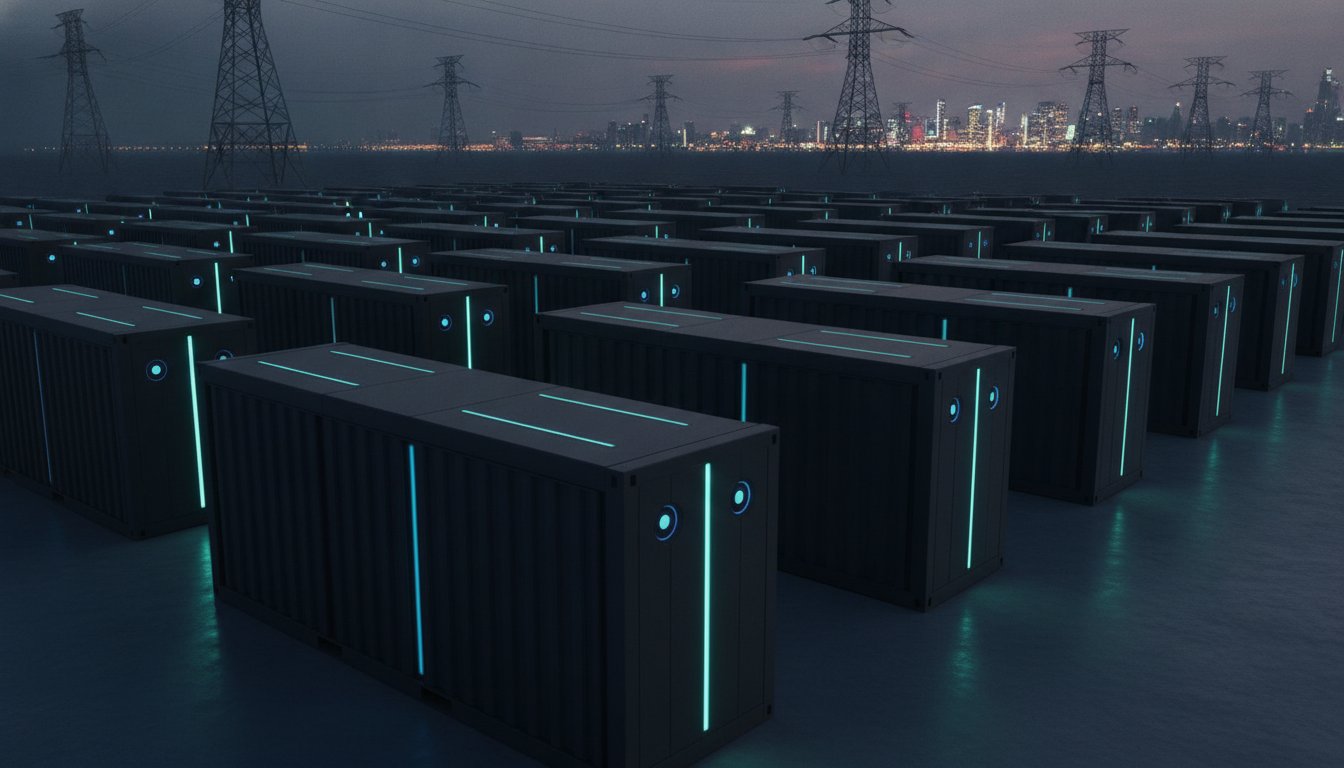
In 2026, the U.S. Energy Information Administration projects that developers will add 24 GW of utility-scale battery capacity to the grid, nearly double the installations seen just two years ago. This rapid expansion underscores the urgent need for utility scale BESS for grid stability as operators face the dual challenge of integrating renewables and maintaining system resilience. You're likely managing the high stakes of grid-code compliance and the persistent risks of thermal runaway in large-scale deployments. It's a complex environment where technical excellence must align perfectly with financial security.
We understand that a successful project requires more than just capacity; it demands a bankable foundation built on proven manufacturing heritage and intelligent optimization. This guide explores how Tier-1 battery energy storage systems, combined with AI-driven management, provide the frequency regulation and voltage control essential for modern infrastructure. You'll learn how to secure your supply chain with dual-chemistry options like LFP and Sodium-ion, maximize asset lifecycles through smart EMS, and meet the rigorous safety standards of the 2026 NFPA 855 code.
Key Takeaways
- Understand how utility scale BESS for grid stability provides the synthetic inertia needed to stabilize high-penetration renewable networks.
- Compare the performance of LFP and Sodium-ion chemistries to select the optimal architecture for long-term durability and safety.
- Leverage AI-driven EMS and digital twins to automate grid-code compliance while maximizing revenue through intelligent market dispatch.
- Secure project financing by prioritizing Tier-1 hardware backed by decades of proven manufacturing heritage and operational excellence.
- Future-proof your infrastructure with a strategic framework for modular integration and comprehensive grid connection studies.
The Role of Utility Scale BESS for Grid Stability in 2026
High-penetration renewable networks require a sophisticated buffer to prevent catastrophic failure. A Battery Energy Storage System (BESS) at utility scale acts as the primary shock absorber for the modern grid. By absorbing excess energy during peak solar generation and discharging it during demand spikes, utility scale BESS for grid stability ensures that the intermittent nature of wind and solar doesn't compromise system reliability. This shift is essential as the global energy mix moves toward a decentralized, inverter-based architecture.
The transition away from traditional thermal power plants has removed the mechanical inertia once provided by massive spinning turbines. This loss of physical momentum makes the grid more susceptible to rapid frequency deviations that can lead to widespread outages. Modern storage infrastructure replaces this lost physical property with digital precision, offering a level of control that mechanical systems simply can't match.
To better understand how these systems are deployed and managed at a 5MW scale, watch this technical breakdown:
Beyond simple storage, these systems provide critical Ancillary Services that are now mandated by updated grid codes like IEEE 2800-2022. Frequency Control Ancillary Services (FCAS) allow the grid to stay within its strict operational limits, while Voltage Regulation ensures that power quality remains consistent across the transmission network. For the most critical scenarios, "Black Start" capabilities enable BESS to re-energize a dead grid without relying on external power, making them the ultimate insurance policy for national infrastructure.
Mechanisms of Grid Support: Frequency and Voltage
Grid stability depends on immediate action. Unlike traditional plants that take minutes to ramp up, BESS responds in milliseconds to balance generation and load. This speed is enabled by advanced Power Conversion Systems (PCS) that manage the bi-directional flow of electricity while maintaining strict voltage stability. Synthetic inertia is the digital emulation of mechanical momentum through high-speed power electronics, providing the essential stabilizing force for 2026 grid resilience.
The Shift from Passive Storage to Active Grid Balancing
The industry has moved beyond "Grid-Following" inverters that simply track the grid's state. In 2026, the standard for bankable infrastructure is "Grid-Forming" capability, which allows the BESS to set its own frequency and voltage parameters. This active participation reduces transmission congestion and prevents the curtailment of renewable assets by absorbing power when lines are at capacity. While these utility systems manage the backbone of the grid, smaller-scale resilience is often handled through a Strategic Guide to Commercial and Industrial BESS Solutions, ensuring stability at every level of the energy hierarchy.
Technical Architecture: LFP vs. Sodium-Ion for Utility Projects
The selection of battery chemistry is the most consequential decision in the design of utility scale BESS for grid stability. While Lithium Iron Phosphate (LFP) remains the dominant choice, the commercial arrival of Sodium-ion in 2026 has introduced a necessary alternative for specific environmental and economic conditions. As the U.S. energy storage market expands to meet a projected 24 GW of new capacity this year, engineering teams must weigh energy density against thermal stability and long-term cycle life. Balancing these factors is critical for maintaining a bankable infrastructure profile.
Evaluating LFP for High-Cycle Utility Applications
LFP technology accounts for approximately 95% of new utility-scale awards globally. Its primary advantage lies in its proven cycle life, typically delivering between 4,000 and 6,000 cycles to 80% state of health. This durability is vital for revenue stacking strategies that require frequent charging and discharging to manage daily peak demand. For developers focused on high-capacity modules, understanding Utility-Scale BESS Procurement involves verifying Depth of Discharge (DoD) ratings and Round-Trip Efficiency (RTE) to ensure the asset's bankability over a 15 to 20 year lifespan. It's the standard for projects where energy density and proven performance are the top priorities.
Sodium-Ion: The Emerging Frontier for Grid Stability
Sodium-ion batteries have emerged as a commercially viable contender in 2026, with cell prices ranging from $46 to $62 per kWh. This chemistry offers superior performance in extreme environments, maintaining operational efficiency in temperatures where LFP systems might require intensive thermal management. Its safety profile is particularly compelling for high-risk zones, as sodium-ion cells are inherently less prone to thermal runaway during transportation or internal short circuits. You can explore a deeper technical breakdown in our analysis of The 2026 State of Sodium-Ion Battery Commercial Availability.
Regardless of chemistry, modern utility projects require a multi-tier safety architecture to ensure utility scale BESS for grid stability remains a low-risk asset. This includes adherence to the 2026 edition of NFPA 855, which mandates stricter gas monitoring and explosion prevention systems. Modular, containerized designs have become the standard for rapid deployment, allowing for pre-tested, "plug-and-play" integration into existing wind and solar farms. These architectures leverage a manufacturing heritage that prioritizes reliability, ensuring that every enclosure meets international certifications before arriving on site. If you're currently evaluating hardware specifications for a large-scale project, our engineering consulting team can help align your technical architecture with specific grid-code requirements.
Intelligent Dispatch: AI-Driven EMS and Grid-Code Compliance
Hardware excellence is only half of the equation for a successful energy project. The true value of utility scale BESS for grid stability is realized through the intelligence of its Energy Management System (EMS). In 2026, static dispatch logic is no longer sufficient to navigate volatile energy markets and increasingly stringent regulatory requirements. Sophisticated AI-driven EMS platforms now act as the central nervous system of the facility, processing vast streams of weather data, market price signals, and grid frequency metrics in real time. This ensures that every megawatt is dispatched with surgical precision to maximize both grid resilience and investor returns.
Meeting regional grid-code compliance, such as the rigorous standards set by AEMO in Australia or IEEE 2800-2022 globally, requires automated responsiveness. These codes mandate that inverter-based resources provide rapid frequency response and voltage control during disturbances. An intelligent EMS doesn't just react to these events; it uses predictive algorithms to anticipate imbalances, ensuring the system remains within operational envelopes. By integrating these compliance protocols directly into the control logic, operators can avoid the heavy financial penalties associated with non-compliance while reinforcing their status as a reliable grid partner.
AI-Driven Optimization for Ancillary Services
The ability to stack multiple revenue streams is what makes a project commercially viable. AI-driven optimization allows for the simultaneous management of Frequency Control Ancillary Services (FCAS), energy arbitrage, and peak shaving. By predicting frequency deviations before they occur, the system can reserve capacity for high-value regulation events without sacrificing arbitrage opportunities. You can explore the technical architecture of these platforms in our guide to AI Driven Energy Management Systems, which details how machine learning models improve dispatch accuracy over time.
Predictive Maintenance and Asset Longevity
Asset management has evolved from reactive repairs to proactive optimization through the use of digital twins. These virtual replicas of the physical BESS allow operators to monitor state-of-health (SoH) at the individual cell level, identifying potential issues long before they lead to downtime. Using AI to detect subtle thermal anomalies or voltage imbalances reduces O&M costs and extends the project's lifecycle to the 15 or 20 year mark required for bankability. This level of oversight is essential for maintaining utility scale BESS for grid stability, as it ensures the system is always ready to respond to a grid emergency.
Effective thermal management is also integrated directly into the EMS logic. By correlating ambient temperature forecasts with discharge schedules, the system can pre-cool battery containers or limit power output during extreme heat events. This prevents accelerated degradation and ensures that the safety systems, as discussed in our previous section on architecture, are never overtaxed. It's a holistic approach to intelligence that protects the physical asset while optimizing its financial performance.

Commercial Bankability: The Tier-1 Manufacturing Advantage
Bankability is the ultimate filter for large-scale energy infrastructure. In the context of utility scale BESS for grid stability, bankability represents the confidence that financiers, insurers, and stakeholders have in the long-term performance and financial security of the asset. It's a metric that extends far beyond a technical data sheet. It encompasses the manufacturer's balance sheet, their historical field data, and the rigor of their quality control processes. For a project to reach financial close in 2026, the hardware must be backed by a legacy of reliability that minimizes perceived risk over a 20 year operational lifespan.
Sourcing from Tier-1 manufacturers with extensive manufacturing heritage, such as our partner Cospowers with over 30 years of experience, provides a foundational layer of security. This longevity serves as a proxy for technical maturity. It ensures that the manufacturer has the institutional knowledge to navigate complex grid-code evolutions and the financial stability to honor long-term warranties. When billions of dollars in infrastructure are at stake, the "proven" nature of the hardware becomes the primary driver for securing competitive financing rates.
Tier-1 Certifications and DNV Verification
Financiers often require independent validation before committing capital to large-scale storage projects. DNV bankability reports are the industry gold standard, providing a third-party audit of manufacturing facilities and system architecture. These reports, combined with international certifications like UL 9540 and UL 9540A, directly impact the project's bottom line by lowering insurance premiums. Adherence to these standards proves that the system can manage thermal runaway risks effectively, a concern we previously identified as a primary pain point for grid operators. This technical validation is essential for moving a project from the feasibility stage to full-scale deployment.
Strategic Procurement and Supply Chain Resilience
Supply chain instability remains a significant risk for 2026 deployments. Mitigating project delays requires established global distribution networks and deep-rooted partnerships. An exclusive partnership between a developer and a Tier-1 manufacturer streamlines the procurement process, ensuring priority access to components even during periods of high market demand. This resilience is further strengthened by BESS Engineering Consulting Services, which help align technical specifications with bankability requirements from the earliest design phases.
Engineering consulting acts as the bridge between raw manufacturing capability and the specific needs of the local grid. By leveraging local expertise alongside Tier-1 hardware, developers can ensure that their utility scale BESS for grid stability meets all regional regulatory hurdles while maintaining a high performance profile. If you are ready to secure Tier-1 hardware and professional engineering support for your next infrastructure project, contact our utility-scale energy storage experts today to discuss your specific requirements.
Implementation: Future-Proofing Utility Scale BESS Deployments
Implementation isn't just about installation; it's the final validation of a strategic vision. For any utility scale BESS for grid stability project in 2026, the process must begin with an exhaustive grid connection study. This analysis ensures that the system integrates seamlessly with existing transmission infrastructure without causing harmonics or voltage instability. Following this, a phased roadmap for commissioning includes factory acceptance testing (FAT) and site acceptance testing (SAT) to verify that the AI-driven EMS and physical hardware operate in perfect synchronization before the asset goes live.
The industry is also witnessing a shift toward "Energy-as-a-Service" (EaaS) models. This approach allows utility providers to deploy massive storage capacity while transferring the operational risks and maintenance burdens to the technology partner. It's a strategic move that prioritizes performance and uptime, ensuring the grid remains resilient without overextending the utility's internal technical resources. Long-term asset management then becomes a collaborative effort, focused on maintaining the high state-of-health (SoH) required for 20 year project lifecycles.
Containerised vs. Modular: Choosing the Right Architecture
Containerised solutions have become the preferred choice for rapid grid stabilization. These "plug-and-play" units are pre-assembled and tested in controlled factory environments, which significantly reduces on-site labor and commissioning times. They provide a self-contained environment with integrated fire suppression and thermal management systems, making them ideal for standard wind and solar farm integration where speed of deployment is a priority.
Modular architectures offer the flexibility required for site-specific constraints or irregular footprints. If a project requires a non-standard layout or future capacity expansion that isn't easily accommodated by standard shipping containers, modular systems allow for a more tailored engineering approach. Regardless of the form factor, high-density utility scale BESS for grid stability requires advanced thermal cooling logic. This is essential to prevent cell degradation and ensure the safety standards we've discussed, such as NFPA 855, are consistently met throughout the asset's life.
Partnering for Global Grid Stability
Successful deployment on a global scale requires a partner with both manufacturing depth and local engineering intelligence. Foton Energy, in strategic partnership with Cospowers, provides this dual advantage across more than 70 countries. We offer end-to-end support that spans from the initial feasibility study and grid connection analysis to the final commissioning and long-term asset management. This ensures that every technical decision is grounded in operational excellence.
By combining a 30 year manufacturing heritage with cutting-edge AI optimization, we ensure that your infrastructure is not just operational, but truly bankable. This collaborative approach allows developers to navigate the complexities of modern grid codes with confidence while securing long-term value. If you're ready to advance your energy strategy and build a more resilient network, partner with Foton Energy for your next utility-scale BESS deployment and lead the transition to a stable, renewable future.
Securing Your Position in the 2026 Energy Market
The transition to a high-penetration renewable grid is no longer a future projection; it's a present reality that demands sophisticated, bankable infrastructure. Success in this landscape requires a strategic alignment of Tier-1 hardware and intelligent software. By prioritizing grid-forming capabilities and dual-chemistry resilience, you ensure that your utility scale BESS for grid stability remains a high-performance asset through decades of market evolution. We've seen how manufacturing heritage and AI-driven optimization are the foundational pillars of project financing and long-term reliability.
Reliability is built on experience. As the exclusive global partner of Cospowers, a Tier-1 manufacturer with a proven heritage since 1993, we provide the technical depth required to meet complex grid-code compliance. Our comprehensive AI-driven EMS ensures your deployment is optimized for both safety and revenue stacking. Consult with Foton Energy for bankable utility-scale BESS solutions and let's build a more resilient energy future together. The path to grid stability is paved with proven technology and expert partnership.
Frequently Asked Questions
What is the primary role of utility-scale BESS in grid stability?
Utility scale BESS for grid stability acts as a high-speed buffer that balances generation and load in real time. It absorbs surplus energy during periods of high renewable output and discharges it during peak demand. This capability provides the synthetic inertia required to stabilize modern, inverter-based grids that lack the mechanical momentum of traditional thermal power plants.
How does BESS provide frequency regulation for the grid?
BESS provides frequency regulation through Frequency Control Ancillary Services (FCAS), responding in milliseconds to any deviation from the standard grid frequency. By injecting or absorbing power almost instantaneously, the system prevents frequency drops that could otherwise trigger protective load shedding or widespread outages. This rapid response is significantly faster than the ramping capabilities of conventional gas or coal plants.
Why is Tier-1 manufacturing status critical for BESS bankability?
Tier-1 status is the primary benchmark for bankability because it signals a manufacturer's financial stability and technical maturity. Sourcing from a Tier-1 partner with over 30 years of manufacturing heritage ensures that warranties are backed by a reliable entity. This reduces the perceived risk for financiers and insurers, often leading to more favorable project financing terms and lower insurance premiums.
Can sodium-ion batteries be used for utility-scale grid storage?
Sodium-ion batteries are a viable utility-scale option in 2026, especially for projects in extreme temperature environments. While Lithium Iron Phosphate (LFP) remains the global standard for high-cycle applications, sodium-ion offers superior safety and performance in high-heat or extreme cold zones. It's an excellent choice for developers looking to diversify their supply chain and mitigate risks associated with lithium price volatility.
What is the difference between grid-forming and grid-following inverters?
Grid-following inverters track the existing grid signal and require a stable voltage source to operate. Grid-forming inverters established their own voltage and frequency parameters, allowing them to lead the grid rather than just follow it. This "grid-forming" capability is essential for microgrid operation and provides "Black Start" support to re-energize the network after a total system failure.
How does an AI-driven EMS improve BESS return on investment?
An AI-driven EMS maximizes ROI by optimizing dispatch schedules based on real-time market signals and weather forecasts. It enables revenue stacking by simultaneously managing arbitrage, frequency regulation, and peak shaving without overtaxing the battery cells. Predictive maintenance algorithms also identify potential failures before they occur, significantly reducing O&M costs and preventing expensive unplanned downtime.
What are the safety standards for utility-scale battery energy storage?
Safety is governed by the 2026 edition of NFPA 855, alongside UL 9540 and UL 9540A certifications. These standards mandate rigorous thermal runaway testing and the installation of advanced fire suppression and gas monitoring systems. Adhering to these international codes is essential for meeting local grid requirements and ensuring the long-term security of large-scale infrastructure investments.
How long is the typical lifecycle of a utility-scale BESS project?
A typical utility scale BESS for grid stability project is engineered for an operational lifecycle of 15 to 20 years. This longevity depends on using high-quality LFP cells that deliver 4,000 to 6,000 cycles and an AI-driven EMS that manages state-of-health. Proper thermal management and predictive maintenance are critical factors that prevent premature degradation and ensure the asset reaches its full financial potential.


