
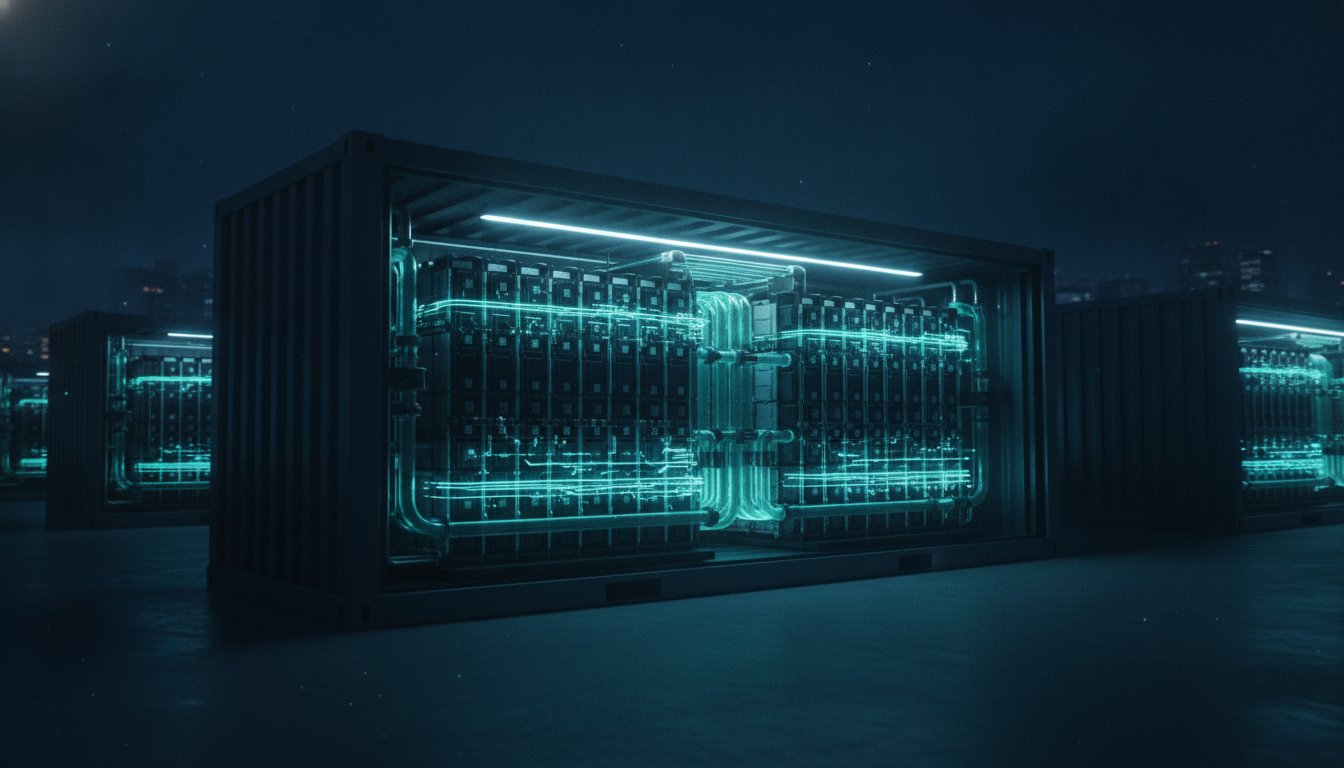
In 2026, thermal management is no longer a secondary engineering detail; it's the primary architect of project bankability. You've likely seen how the rapid shift toward high-density LFP chemistry has fundamentally changed the risk profile of grid-scale assets. As energy densities reach new heights, the performance of utility scale battery cooling systems has become the single most important factor in preventing thermal runaway and mitigating capacity degradation. It's a challenge that requires a move from passive safety to active, intelligent optimization.
We're here to help you navigate these complexities by exploring how advanced liquid and air cooling architectures determine the safety, lifespan, and financial stability of your storage projects. This guide provides a deep dive into the latest cooling technologies and the rigorous requirements of the NFPA 855 (2026 Edition). You'll discover how to maximize battery cycle life, ensure strict grid-code compliance, and ultimately improve project bankability for your financiers.
Key Takeaways
- Define the critical link between thermal architecture and long-term asset health, focusing on the mitigation of internal resistance during high-C-rate discharge events.
- Analyze the technical shift toward liquid cooling for utility scale battery cooling systems, where superior heat transfer coefficients drastically reduce parasitic energy consumption compared to traditional air-cooled methods.
- Assess the distinct thermal management strategies required for high-density LFP modules versus emerging sodium-ion systems to maintain stability under varying grid demands.
- Discover how AI-driven energy management systems utilize predictive modeling and weather forecasting to optimize cooling cycles and maximize battery cycle life.
- Identify the essential engineering benchmarks that transform thermal management from a technical necessity into a strategic pillar of project bankability and investor confidence.
The Critical Role of Thermal Management in Utility-Scale BESS
In the 2026 energy landscape, a Battery Energy Storage System (BESS) is only as reliable as its ability to shed heat. High-C-rate discharge events, common in frequency response and peak shaving, trigger significant heat generation through internal resistance. This thermodynamic reality makes utility scale battery cooling systems the silent engine behind project bankability. Without precise control, the electrochemical reactions within cells become unpredictable, leading to inefficient power delivery and increased operational risk.
Reliability starts with a robust large scale battery safety architecture. When temperature variances occur across a battery string, the hottest cells degrade faster, creating a "weakest link" effect that causes premature system failure. Modern LFP and Sodium-ion cells require an optimal operating window, typically between 15°C and 35°C, to maintain their rated capacity over thousands of cycles. Maintaining this narrow range is essential for ensuring that the asset performs as promised over its 15 to 20 year lifespan.
To better understand how cooling methods vary and their physical impact on battery cells, watch this detailed technical breakdown:
Heat: The Primary Enemy of Battery Longevity
High temperatures accelerate chemical degradation. They specifically trigger the growth of the Solid Electrolyte Interphase (SEI) layer on the anode, which consumes active lithium and increases internal resistance. This creates a destructive feedback loop; higher resistance generates more heat, which further thickens the SEI layer. If the thermal load isn't managed, the risk of cell venting or catastrophic thermal runaway increases significantly. Thermal management is the active regulation of cell temperature to maintain electrochemical stability.
Grid Stability and Thermal Readiness
Grid operators demand rapid response. For a BESS to provide synthetic inertia or frequency regulation, it must handle sudden, intense power throughput. Effective utility scale battery cooling systems ensure the system is thermally ready for these spikes without hitting safety derating limits that would disconnect the asset from the grid. This performance is vital for maintaining the State of Health (SOH) required by long-term power purchase agreements. Compliance with the 2026 edition of NFPA 855 now mandates this level of rigorous thermal monitoring to ensure infrastructure resilience and public safety.
Air Cooling vs. Liquid Cooling: A Technical Comparison for 2026
Efficiency is the primary benchmark for modern energy infrastructure. When evaluating utility scale battery cooling systems, the fundamental physics of heat transfer dictate the winner. Liquid cooling is approximately 25 times more efficient at transferring heat than air. This massive disparity is why the industry is rapidly moving away from traditional forced-air convection. While air systems rely on moving large volumes of gas, liquid architectures use high-conductivity fluids to extract heat directly from the battery cells, ensuring stability during aggressive discharge cycles.
Parasitic energy consumption remains a critical metric for project ROI. In multi-MWh deployments, the power required to run massive HVAC fans can significantly erode the net energy delivered to the grid. Liquid systems utilize efficient pumps that can reduce parasitic power consumption by as much as 50 percent. This efficiency gain directly improves the Levelized Cost of Storage (LCOS) and the overall project bankability. Maintenance profiles also diverge; air systems require frequent HVAC filter changes and ducting inspections, while liquid systems focus on coolant loop integrity and pump longevity. For developers seeking to optimize these thermal trade-offs, a utility-scale storage partner can help align the architecture with the project's specific C-rate and duration requirements.
Footprint optimization is another decisive factor for 2026 projects. Liquid cooling architectures enable 40 to 60 percent more capacity in the same physical footprint compared to air-cooled alternatives. This allows developers to pack more MWh into standard containerized solutions, which is essential as land costs and interconnection constraints increase. As we move toward 5 MWh+ containers, the integration of AI-assisted thermal management solutions is becoming necessary to manage these high-density thermal loads with surgical precision.
Air Cooling: Simplicity for Lower Density Projects
Air cooling utilizes forced convection through specialized HVAC units and internal ducting to manage temperatures. It's often the ideal choice for 1-hour duration systems or low-C-rate applications where heat generation is manageable. However, it faces the 'Dead Zone' problem; air struggles to penetrate the center of dense battery racks, leading to internal cell temperature gradients. These gradients cause uneven aging across the string, which eventually limits the usable capacity of the entire system.
Liquid Cooling: The Industry Standard for Utility Density
Liquid cooling has become the baseline for high-density LFP projects. By circulating a water-glycol mixture or dielectric fluid through cold plates in direct contact with the cells, these systems achieve +/- 2°C temperature consistency across thousands of cells. This uniformity is vital for preventing the localized hot spots that lead to thermal runaway. Furthermore, the ability to extract heat locally significantly reduces the risk of fire propagation between modules, making it a cornerstone of modern safety standards.
Chemistry-Specific Cooling: LFP vs. Sodium-Ion Requirements
Thermal management is not a universal solution; it's a precision-engineered response to specific cell chemistry. In 2026, the dominance of Lithium Iron Phosphate (LFP) is being complemented by the rise of Sodium-ion (SIB) technologies. Each chemistry presents unique thermodynamic challenges that dictate the design of utility scale battery cooling systems. While LFP requires aggressive heat extraction to maintain its safety profile in high-density blocks, Sodium-ion demands a more versatile thermal architecture that can pivot between cooling and heating to maintain performance in extreme environments.
Designing for chemistry means adjusting coolant flow rates and thermal mass management based on energy density. High-density LFP modules, often utilizing 314 Ah or 560 Ah prismatic cells, generate concentrated heat during rapid discharge. Conversely, Sodium-ion cells often exhibit a wider temperature tolerance but require precise regulation to handle higher discharge rates without hitting thermal limits. For developers, the choice of cooling architecture must align with the specific electrochemical behavior of the chosen cells to ensure long-term stability and ROI.
Optimizing LFP Cycle Life Through Active Cooling
Maximizing the lifespan of an asset is the cornerstone of utility-scale battery energy storage systems in Australia and other high-ambient-temperature markets. In 5 MWh+ containerized blocks, "hot spots" can form deep within the battery racks where airflow is restricted. Liquid cooling extends LFP life by up to 20% compared to air cooling. By ensuring every cell stays within its narrow optimal window, these systems prevent the uneven degradation that often leads to premature string failure and costly maintenance interventions.
The Sodium-Ion Advantage in Thermal Management
Sodium-ion technology offers a compelling safety profile with a lower risk of thermal runaway compared to traditional NMC chemistries. However, this doesn't eliminate the need for thermal regulation. SIB systems are particularly effective in cold climates because the cooling loop can double as a heating system, bringing the cells up to operating temperature for maximum efficiency. This versatility has significant strategic implications for a sodium-ion battery for data centers, where reliability and rapid response are non-negotiable. While the chemistry is more resilient, utility scale battery cooling systems still provide the critical guardrails needed to manage the heat generated during the high-power bursts required by modern AI workloads.

AI-Driven Thermal Optimization and Predictive Maintenance
Intelligence is the new coolant. In 2026, the most effective utility scale battery cooling systems are no longer standalone hardware units; they're fully integrated components of an AI driven energy management system. This integration allows for a proactive thermal shield that anticipates heat generation rather than simply reacting to it. By bridging the gap between electrochemical data and cooling hardware, operators can achieve a level of precision that was previously impossible, ensuring that every watt of cooling effort is spent exactly where it's needed.
Predictive cooling represents a significant leap forward in operational strategy. By analyzing local weather forecasts and day-ahead grid demand, the AI can pre-cool the battery racks before a high-C-rate discharge event begins. This strategy prevents the system from playing "catch-up" with rising temperatures, which is often when the highest parasitic losses occur. Dynamic load management further refines this by balancing cooling intensity with real-time battery throughput, ensuring the system maintains its optimal operating window without wasting energy during periods of low activity.
Security is bolstered through advanced sensor fusion. AI algorithms now monitor for minute deviations in pressure, flow rates, and humidity to detect coolant leaks or pump failures long before they trigger a system-wide alarm. This high-fidelity monitoring is essential for high-density LFP and Sodium-ion installations where a small failure can quickly escalate. If you're looking to implement these intelligent safeguards in your next project, explore our Intelligent EMS and utility-scale storage solutions to see how we prioritize asset safety.
The Role of Digital Twins in Thermal Modeling
Digital twins allow engineers to simulate complex heat plumes within containerized BESS under extreme stress scenarios. These models provide data-driven insights that are critical for BESS project feasibility studies, allowing for the optimization of rack placement and coolant flow paths before a single piece of hardware is installed. During operation, the digital twin receives real-time sensor data to adjust pump speeds, minimizing parasitic loss while maintaining +/- 2°C consistency across the entire asset.
Reducing O&M Through Intelligent Monitoring
Moving from reactive to predictive maintenance fundamentally changes the O&M cost structure. Instead of scheduled filter changes or manual loop inspections, the system generates automated alerts based on actual hardware performance and thermal anomalies. This shift improves asset uptime and significantly reduces the frequency of field service interventions. By identifying a degrading pump or a clogged heat exchanger weeks in advance, operators can schedule repairs during planned downtime, protecting the project's long-term IRR and bankability.
Engineering Bankable BESS: Foton’s Approach to Thermal Architecture
Engineering excellence is the bridge between a theoretical energy storage model and a high-performance grid asset. For developers and EPCs, the selection of utility scale battery cooling systems is a decision that echoes through the entire twenty-year lifecycle of the project. We treat thermal architecture as a foundational pillar of grid-code compliance and long-term financial performance. Our strategic partnership with Cospowers brings Tier-1 manufacturing precision to every thermal loop, ensuring that the cooling hardware is as resilient as the battery cells it protects.
Reliability is a manufactured outcome, not a happy accident. Our approach integrates end-to-end BESS engineering consulting services to address the unique thermal profiles of each site. We don't just provide hardware; we engineer a cohesive ecosystem where coolant flow, fire suppression, and energy management work in perfect alignment. This rigorous design process includes several critical validation steps:
- Pressure-tested cooling loop integrity to prevent dielectric fluid loss over thousands of operational hours.
- Advanced fire suppression integration that utilizes high-fidelity thermal sensors for localized detection.
- Optimized heat exchanger sizing designed to maintain the optimal operating window even during peak summer loads in arid environments.
The Foton-Cospowers Advantage in Utility Storage
Stability is backed by an extensive manufacturing heritage. With over 30 years of experience in high-performance energy storage, the Foton-Cospowers partnership offers a level of technical security that few can match. This collaboration provides our partners with global supply chain expertise for wholesale battery storage procurement, ensuring that every containerized solution meets elite quality standards. Whether deploying in the Australian desert or a high-density urban data center, our customized utility scale battery cooling systems are engineered to thrive in diverse climates.
Securing Project Financing Through Thermal Excellence
Financiers view thermal management as a direct proxy for project risk. In the 2026 market, liquid-cooled systems have become the baseline requirement for 10-year plus utility assets because they offer a predictable degradation curve. There is a clear, DNV-verified link between thermal stability and project bankability; a system that stays cool is a system that stays profitable. By partnering with Foton, you gain a steady, guiding hand that prioritizes operational excellence and commercial stability. We invite you to participate in a shared vision of a cleaner future, grounded in rigorous testing and elite engineering. Let's build a more resilient energy deployment together.
Securing the Future of Grid-Scale Infrastructure
The transition to high-density energy storage requires a fundamental shift in how we approach thermal architecture. It is clear that the performance of utility scale battery cooling systems is now the primary determinant of an asset's safety, longevity, and long-term ROI. By moving beyond passive air cooling and embracing AI-optimized liquid architectures, developers can protect their investments against the risks of thermal runaway and capacity degradation. These technical safeguards ensure that grid-scale assets remain dispatchable and profitable throughout their intended lifecycle.
Reliability is built through strategic alignment and elite manufacturing. As the exclusive global partner of Tier-1 manufacturer Cospowers, we provide a DNV-verified bankability architecture that meets the most stringent international standards. Our AI-driven EMS further enhances performance by providing predictive thermal modeling that minimizes parasitic losses. We invite you to partner with Foton for bankable, liquid-cooled utility BESS solutions that are engineered for the challenges of 2026 and beyond. Let's work together to build a more resilient and sustainable energy landscape.
Frequently Asked Questions
Why is liquid cooling preferred over air cooling for utility-scale battery projects?
Liquid cooling is preferred because it offers approximately 25 times more efficiency in heat transfer compared to air. This massive disparity is critical for managing the high thermal loads of modern 5 MWh+ containers. By using cold plates in direct contact with cells, liquid systems achieve superior temperature uniformity. This is essential for preventing localized hot spots and extending the cycle life of high-density battery modules in demanding grid environments.
How does the cooling system affect the overall efficiency (RTE) of a BESS?
The cooling system directly impacts the Round-Trip Efficiency (RTE) by acting as a parasitic load. Traditional air-cooled systems often require massive HVAC fans that consume significant power, whereas liquid-cooled utility scale battery cooling systems use high-efficiency pumps that can reduce this parasitic draw by half. Lowering this auxiliary energy consumption ensures that more of the stored power is available for discharge to the grid, improving the project's overall energy yield.
Can cooling systems prevent thermal runaway in LFP batteries?
Yes, advanced cooling systems act as the primary defense against thermal runaway by keeping cells within their safe operating window. Liquid cooling is particularly effective because it extracts heat directly from the cell surface, preventing the initial temperature spikes that lead to chemical instability. By maintaining a consistency of +/- 2°C across the system, these architectures stop the localized heat accumulation that could otherwise trigger a chain reaction across the battery string.
What are the maintenance requirements for a liquid-cooled BESS container?
Maintenance for liquid-cooled systems focuses on coolant loop integrity and pump performance rather than the frequent filter changes required by air-cooled HVAC units. Technicians perform periodic checks for leaks, monitor coolant levels, and verify the chemical balance of the fluid. These systems are designed for long-term reliability, often utilizing sensors to provide predictive maintenance alerts that identify potential hardware issues before they impact system uptime or safety.
Does sodium-ion battery storage require different cooling than LFP?
Sodium-ion batteries require a more versatile thermal management approach because they often operate across a wider temperature range. While LFP systems focus heavily on aggressive heat extraction, sodium-ion cooling loops often double as heating systems to bring cells up to optimal operating temperature in cold environments. This dual-purpose design ensures that sodium-ion assets maintain peak performance and safety during the high-power bursts required for frequency regulation or data center backup.
How much energy do cooling systems consume in a utility-scale battery?
Energy consumption varies based on ambient conditions and the C-rate of operation, but cooling typically accounts for the largest portion of a system's parasitic load. In high-density utility scale battery cooling systems, liquid cooling can reduce this consumption by 40 to 60 percent compared to air-cooled alternatives. Reducing this overhead is vital for developers who need to maximize the net energy delivered to the grid to meet their specific financial performance targets.
What happens if a cooling system fails in a grid-scale battery?
If a cooling system fails, the battery management system (BMS) will immediately trigger a safety derating or a full system shutdown to prevent damage. Without active thermal regulation, internal temperatures would quickly exceed safe limits during discharge, risking permanent capacity loss or thermal runaway. Modern architectures include redundant pumps and sensors to ensure that even a partial component failure doesn't leave the entire asset vulnerable to catastrophic overheating during peak demand.
How does AI improve the performance of battery cooling systems?
AI improves performance by transitioning thermal management from a reactive process to a predictive one. By analyzing weather forecasts and grid demand data, an AI-driven EMS can pre-cool the battery racks before an anticipated high-load event. This proactive adjustment prevents temperature spikes and reduces the total energy required for cooling, significantly improving both the lifespan of the battery cells and the project's overall bankability through smarter load management.


