
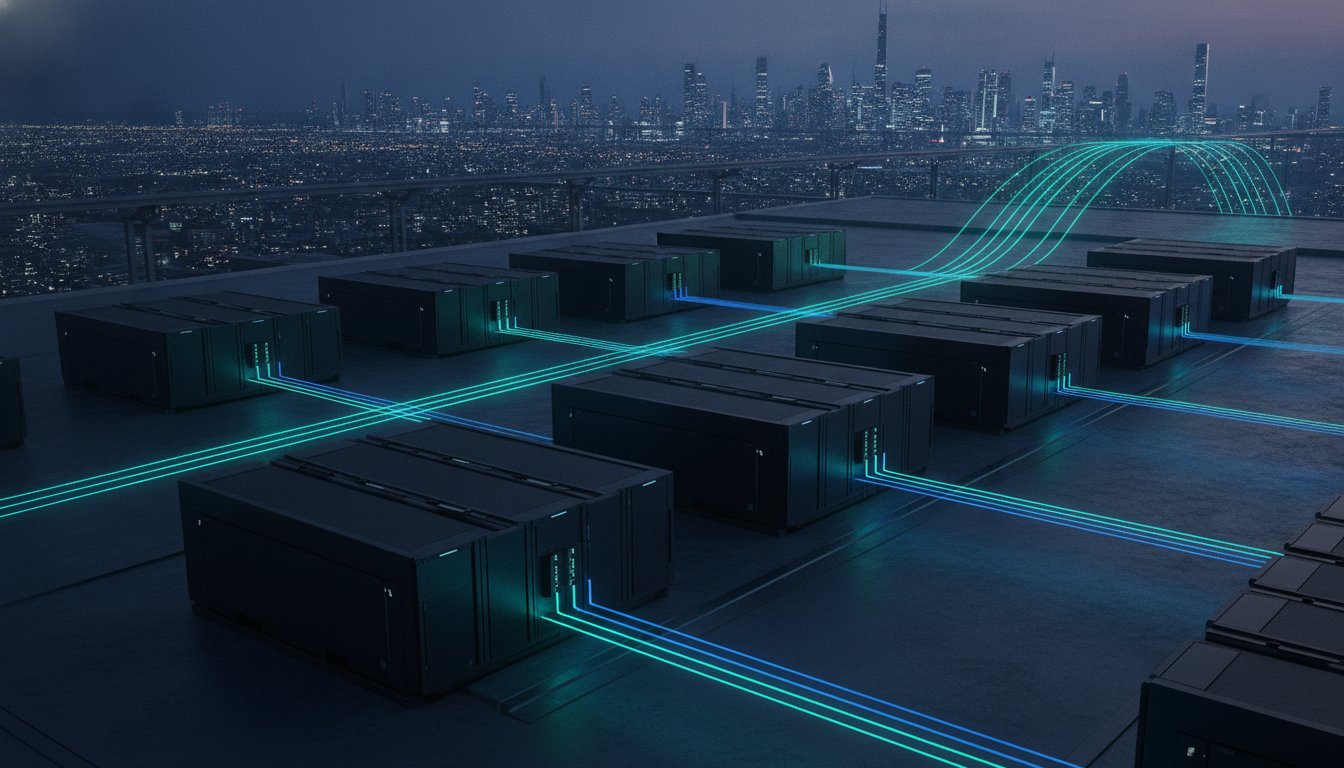
The U.S. grid interconnection queue has reached a staggering 2,600 GW backlog, forcing developers to wait an average of 60 months for a connection. This bottleneck has transformed the business case for energy storage systems from a purely operational decision into a high-stakes financial strategy. You're likely facing the dual pressure of high upfront CAPEX and the volatility of modern energy markets, all while worrying about how battery degradation will impact your long-term asset life. It's a complex environment where bankability depends on more than just hardware; it requires a synergy of proven engineering and intelligent software.
This strategic guide shows you how to build a high-ROI business case by integrating Tier-1 hardware with AI-driven management and diverse revenue stacking. You'll learn to navigate the 2026 regulatory landscape, including how to maximize the 30% Investment Tax Credit preserved by the One Big Beautiful Bill Act of 2025. We'll outline a clear path toward predictable ROI through AI optimization and verified hardware reliability. By the end of this article, you'll have the framework needed to transform energy storage into a resilient, high-performance pillar of your industrial ecosystem.
Key Takeaways
- Understand why the business case for energy storage systems has transitioned from an optional sustainability goal to a non-negotiable pillar of industrial infrastructure.
- Master the strategy of revenue stacking to combine multiple value streams, such as peak shaving and frequency regulation, for accelerated project payback.
- Identify the critical hardware specifications and Tier-1 manufacturing standards required to secure institutional financing and optimize insurance premiums.
- Leverage AI-driven energy management systems to transform passive storage into intelligent assets that anticipate grid spikes and weather-related disruptions.
- Execute a structured investment roadmap from initial energy audits to commissioning to ensure grid-code compliance and long-term operational excellence.
Market Dynamics: Why the 2026 Business Case for BESS is Irresistible
Energy security isn't a luxury for industrial operations anymore. In 2026, the business case for energy storage systems has pivoted from a secondary sustainability goal to a fundamental requirement for operational survival. Global energy pricing remains volatile; for many C&I leaders, achieving behind-the-meter autonomy is the only way to shield their margins from unpredictable tariff spikes. You can't rely on the legacy grid to provide the stability your high-performance facility requires.
Beyond cost control, Battery Energy Storage Systems (BESS) serve as a sophisticated insurance policy that strengthens the business case for energy storage systems by mitigating risk. As grid instability increases, these systems provide the resilience needed to prevent costly downtime that can derail production schedules. They also play a pivotal role in meeting mandatory decarbonization targets. By integrating various energy storage technologies, you can simplify Scope 2 emissions reporting and ensure your facility meets increasingly strict global standards.
To see how these systems manifest in a physical industrial environment, watch this breakdown of a 1MWh BESS installation:
The Rise of Distributed Energy Resources (DERs)
The traditional model of centralized power is giving way to a decentralized architecture. Businesses are evolving into prosumers who don't just consume power but actively manage their own generation and storage assets. This shift is driven by necessity. With a 2,600 GW backlog in the U.S. grid interconnection queue as of 2026, local grid congestion is a primary barrier to industrial expansion. Integrated storage allows you to bypass these bottlenecks by providing the capacity the grid can't currently deliver, ensuring your expansion plans stay on track.
Regulatory Incentives and Global Compliance
Strategic investment is currently bolstered by robust policy frameworks across the globe. The Investment Tax Credit (ITC) for standalone storage provides a 30% base credit, a provision preserved by the One Big Beautiful Bill Act (OBBBA) of 2025. Similar momentum exists within the EU Green Deal and Australian state-level grants, creating a favorable environment for capital deployment. Navigating these incentives requires strict adherence to grid-code compliance to ensure project approval and long-term viability. In 2026, the bankability threshold for BESS projects is defined by the seamless integration of Tier-1 hardware reliability and AI-optimized revenue stacking that guarantees a predictable return on investment within the first five years of operation.
Economic Pillars: Revenue Stacking and Operational Savings
Profitability is no longer a single-track pursuit. In 2026, building a robust business case for energy storage systems requires a sophisticated approach known as revenue stacking. This strategy involves layering multiple financial benefits, such as demand charge reduction and grid service participation, to accelerate project payback. By moving beyond simple energy arbitrage, asset owners can transform a passive battery into a dynamic financial engine. Detailed RMI analysis on BESS economics confirms that stacking these services is the primary driver of modern project bankability.
Peak shaving remains the most immediate source of operational savings for commercial and industrial facilities. Demand charges can account for 30% to 50% of a commercial electricity bill; BESS technology allows you to discharge stored energy during these high-tariff periods to flatten your load profile. This is often paired with load shifting, where the system charges using low-cost, off-peak energy for use when prices rise. High-margin revenue also comes from ancillary services like Frequency Control Ancillary Services (FCAS) and grid balancing, which reward systems for their ability to stabilize the grid in milliseconds.
Behind-the-Meter (BTM) vs. Front-of-the-Meter (FTM)
Behind-the-meter (BTM) installations offer a faster path to ROI for industrial sites compared to utility-scale, front-of-the-meter deployments. While FTM projects rely on wholesale market volatility, BTM storage directly reduces facility-specific demand charges and avoids expensive infrastructure upgrades. If you're planning a site expansion, BTM storage can often eliminate the need for costly high-voltage transformer upgrades. For a technical deep dive into these localized benefits, review our Strategic Guide to Commercial and Industrial BESS Solutions.
Maximizing Solar ROI Through Storage
Solar assets without storage frequently suffer from curtailment when production exceeds immediate facility demand. Integrating a BESS eliminates this waste by capturing excess midday generation for use during evening peaks or overnight. This integration can improve self-consumption ratios from a standard 30% to over 80%, significantly reducing the "avoided cost" of grid energy purchases. Partnering with an expert for engineering consulting ensures these complex savings are modeled accurately before you break ground. Ultimately, these operational efficiencies solidify the business case for energy storage systems by providing a predictable, multi-layered financial return.
Technical Bankability: Tier-1 Manufacturing and Safety Architecture
Bankability starts with hardware reliability. Institutional lenders won't touch a project without Tier-1 manufacturing status. This status, held by industry leaders like Cospowers, serves as a proxy for long-term stability and performance. It ensures that the business case for energy storage systems is built on a foundation that can withstand the 15-to-20-year lifespan required for industrial assets. When you're managing millions in capital, the manufacturing pedigree of your battery provider is your first line of defense against stranded assets.
Safety architecture is now a quantifiable financial asset. Systems that exceed NFPA 855 and UL 9540 standards don't just protect lives; they directly lower insurance premiums and reduce operational risk. Advanced thermal management, particularly liquid cooling, is critical here. By maintaining uniform cell temperatures, liquid cooling significantly reduces degradation rates compared to older air-cooled designs. This technical precision is highlighted in the recent Department of Energy BESS report, which emphasizes that system architecture is the primary defense against supply chain volatility and operational failure.
Hardware Reliability and Manufacturing Heritage
A brand's manufacturing heritage is the most reliable predictor of future failure rates. Partners with 30+ years of experience bring a deep understanding of cell chemistry and integration that newcomers simply lack. This expertise is verified through international certifications and DNV performance audits, which are essential for securing low-cost capital. For those sourcing large-scale assets, our guide on Utility-Scale BESS Procurement provides a framework for vetting these global standards and ensuring your supply chain is resilient.
Sodium-Ion: Future-Proofing the Business Case
While LFP remains the dominant choice for 2026, Sodium-ion is rapidly emerging as a superior alternative for specific high-density environments like data centers. Its inherent safety profile and performance in extreme temperatures strengthen the business case for energy storage systems where fire risk must be zero. Although the cost-per-cycle is currently being optimized, the lack of reliance on lithium and cobalt makes it a strategic hedge against material price spikes. You can find a detailed breakdown of current market status in our analysis of Sodium-Ion Battery Commercial Availability.

AI-Driven Energy Management: The Multiplier for Long-Term ROI
Intelligence is the definitive differentiator in 2026. While Tier-1 hardware provides the physical foundation, the business case for energy storage systems is truly realized through the software that governs it. We've moved beyond passive storage. Today's assets are intelligent participants in the energy market, capable of autonomous decision-making. By deploying an AI-driven Energy Management System (EMS), you transition from simple backup power to a dynamic financial instrument that responds to market signals in real time.
Predictive analytics form the core of this transformation. These systems don't just react to current conditions; they anticipate grid price spikes and weather-related solar dips before they occur. This foresight allows for optimized charging during periods of low demand and strategic discharging when the financial benefit is highest. This level of optimization is what makes complex revenue stacking possible, as the AI shifts between frequency regulation and peak shaving without human intervention. The reliability of these systems is reflected in the data. The number of fire incidents per GWh deployed fell by 98% between 2018 and 2024, a decline driven largely by superior AI-driven monitoring and thermal control.
The Role of the Energy Management System (EMS)
Think of the EMS as the brain of your entire infrastructure. It's the critical link that coordinates the battery cells, the power conversion system, and the external grid. A sophisticated AI Driven Energy Management System integrates seamlessly with your existing SCADA and Building Management Systems. This interconnectedness ensures that energy storage isn't a siloed asset but a central part of your facility's operational intelligence. If you're looking to optimize your site's performance, our team can provide an Intelligent EMS tailored to your specific load profile.
Data Center and Mission Critical Optimization
In high-stakes environments like data centers, AI manages the delicate balance between Uninterruptible Power Supply (UPS) functions and grid service participation. Sub-millisecond response times are non-negotiable here to ensure business continuity. By leveraging AI, these facilities can bypass grid interconnection delays and maintain 100% uptime while simultaneously generating revenue from frequency response markets. For hyperscale operators, exploring a Sodium-Ion Battery for Data Centers offers a safe, high-performance solution to the growing AI power crunch. This combination of advanced chemistry and predictive software provides the ultimate hedge against energy market volatility.
Developing Your Investment Roadmap: From Feasibility to Commissioning
Execution requires a disciplined, multi-phase approach. Building a business case for energy storage systems is only the beginning; translating that case into a commissioned asset involves rigorous technical validation and strategic procurement. You need a roadmap that accounts for the complexities of modern grid integration and the specific physical constraints of your facility. This process ensures that your investment moves from a theoretical model to a high-performance reality without the risk of costly mid-project revisions.
- Step 1: Energy Audit and Load Analysis. We begin by establishing a baseline. A comprehensive audit of your facility's energy consumption patterns and peak demand periods is essential to size the system correctly and maximize ROI.
- Step 2: Feasibility and Compliance. This phase focuses on grid-code compliance and physical site constraints. Ensuring your system meets local utility requirements early prevents multi-year delays in the interconnection queue.
- Step 3: Strategic Procurement. Navigating Tier-1 supply chains is critical. By partnering with Foton, you gain access to a heritage of manufacturing excellence that guarantees the reliability and bankability of your hardware.
- Step 4: Commissioning and Management. The final step involves rigorous testing and the deployment of long-term asset management protocols. This includes the AI-driven monitoring discussed earlier to ensure the system performs at peak efficiency from day one.
The Importance of BESS Engineering Consulting
Early-stage technical guidance is the most effective way to reduce "soft costs" and project risk. Professional BESS Engineering Consulting Services provide the expertise needed to navigate the grid connection bottleneck, which currently sees projects waiting up to 60 months for approval. We help you optimize the technical architecture of your project to ensure it meets the highest standards of bankability and operational resilience. Expert consulting transforms potential roadblocks into manageable milestones, keeping your timeline secure.
Financing Models: CAPEX vs. PPA
Choosing the right financial structure is as important as choosing the right technology. While a CAPEX-heavy model offers full ownership and maximum long-term savings, a Power Purchase Agreement (PPA) or Energy-as-a-Service model provides immediate benefits with zero upfront investment. Your choice depends on your organization's capital strategy and tax appetite. It's a fact that technical bankability directly influences the interest rates of green finance loans; systems with Tier-1 certifications and proven safety records attract more favorable terms. To begin your journey toward energy independence, Contact Foton Energy for a Strategic BESS Feasibility Assessment today.
Securing Your Position in the 2026 Energy Economy
The 2026 landscape demands a decisive shift from passive energy consumption to active asset management. We have explored how a robust business case for energy storage systems relies on the seamless integration of Tier-1 manufacturing heritage and AI-driven operational intelligence. By mastering the art of revenue stacking and prioritizing technical bankability, you can transform energy storage into a resilient, high-performance pillar of your industrial infrastructure. These strategies don't just mitigate the risks of grid volatility; they turn energy management into a sustainable competitive advantage.
Success in this complex market requires a partner with proven global reach and deep technical expertise. As the exclusive global partner of Cospowers, Foton brings Tier-1 manufacturing standards and a sophisticated, AI-driven EMS to your project, ensuring real-time ROI optimization across a global network spanning 70+ countries. We invite you to Partner with Foton for Bankable Energy Storage Infrastructure and secure a stable, future-ready foundation for your large-scale investments. Let's build a cleaner, more profitable industrial ecosystem together.
Frequently Asked Questions
What is the typical ROI for a commercial energy storage system in 2026?
Payback periods for commercial installations typically range from four to seven years. This timeline is heavily influenced by your ability to capture the 30% base Investment Tax Credit and participate in local demand response programs. When you factor in the reduction of demand charges, which can account for half of an industrial power bill, the financial return becomes highly predictable. High-performance systems utilizing AI optimization tend to reach the break-even point faster than passive configurations.
How does revenue stacking improve the business case for BESS?
Revenue stacking transforms a single-purpose asset into a multi-stream financial engine. By layering services like peak shaving, load shifting, and frequency regulation, you ensure the battery is generating value during every hour of operation. This diversification strengthens the business case for energy storage systems by shielding the investment from volatility in any single energy market. It's the most effective strategy for maximizing the internal rate of return on large-scale infrastructure.
What is the difference between Tier-1 and Tier-2 battery manufacturers for financing?
Tier-1 manufacturers provide the manufacturing heritage and financial transparency that institutional lenders require for non-recourse project financing. Lenders view Tier-1 status as a guarantee of long-term warranty support and technical reliability. Projects using Tier-2 hardware often face higher interest rates or stricter collateral requirements because the long-term failure rates are less documented. Choosing a Tier-1 partner is a strategic move to lower your weighted average cost of capital.
Can I use sodium-ion batteries for utility-scale energy storage projects?
Sodium-ion technology is commercially viable in 2026 but is currently most effective for specific high-density or safety-critical applications. While Lithium Iron Phosphate (LFP) remains the dominant choice for utility-scale duration, sodium-ion is an excellent hedge against lithium supply chain risks. It's particularly useful in environments with extreme temperature fluctuations where LFP might require more intensive thermal management. Most utility-scale developers still favor LFP for its established cost-per-cycle at massive scales.
How does an AI-driven EMS increase the lifespan of my battery system?
An intelligent EMS prevents premature degradation by precisely managing charging cycles and thermal profiles. By using predictive analytics to avoid deep discharge cycles and excessive heat buildup, the software can extend the operational life of the cells by 15% to 20%. This proactive management ensures that the system maintains its capacity over the full 15-to-20-year project life. It's a critical component for maintaining the long-term health of your capital investment.
What are the main risks to a BESS business case and how can they be mitigated?
Market volatility and interconnection delays are the primary risks to a business case for energy storage systems today. You can mitigate these by conducting rigorous early-stage feasibility studies and utilizing AI-driven trading platforms to navigate price shifts. Choosing hardware with verified safety certifications like UL 9540A also reduces the risk of insurance premium spikes or catastrophic failure. A structured engineering roadmap is your best defense against these external variables.
Does a BESS require significant maintenance or operational staff?
Modern energy storage systems are designed for high levels of autonomy and require very little on-site personnel. Most operational monitoring is performed remotely through the cloud-based EMS, which provides real-time alerts for predictive maintenance. Physical maintenance is typically limited to annual or semi-annual inspections of the cooling systems and electrical connections. This low operational expenditure is one of the primary reasons BESS is an attractive asset for lean industrial teams.
How long does the feasibility and grid connection process typically take?
The initial feasibility and design phase usually takes three to six months. However, the grid connection process has become the most significant bottleneck in the industry. As of 2026, the median wait time for a new project to connect to the U.S. grid is approaching 60 months. Starting your engineering consulting and filing your interconnection application as early as possible is essential to meeting your commissioning deadlines and securing your project's place in the queue.


