
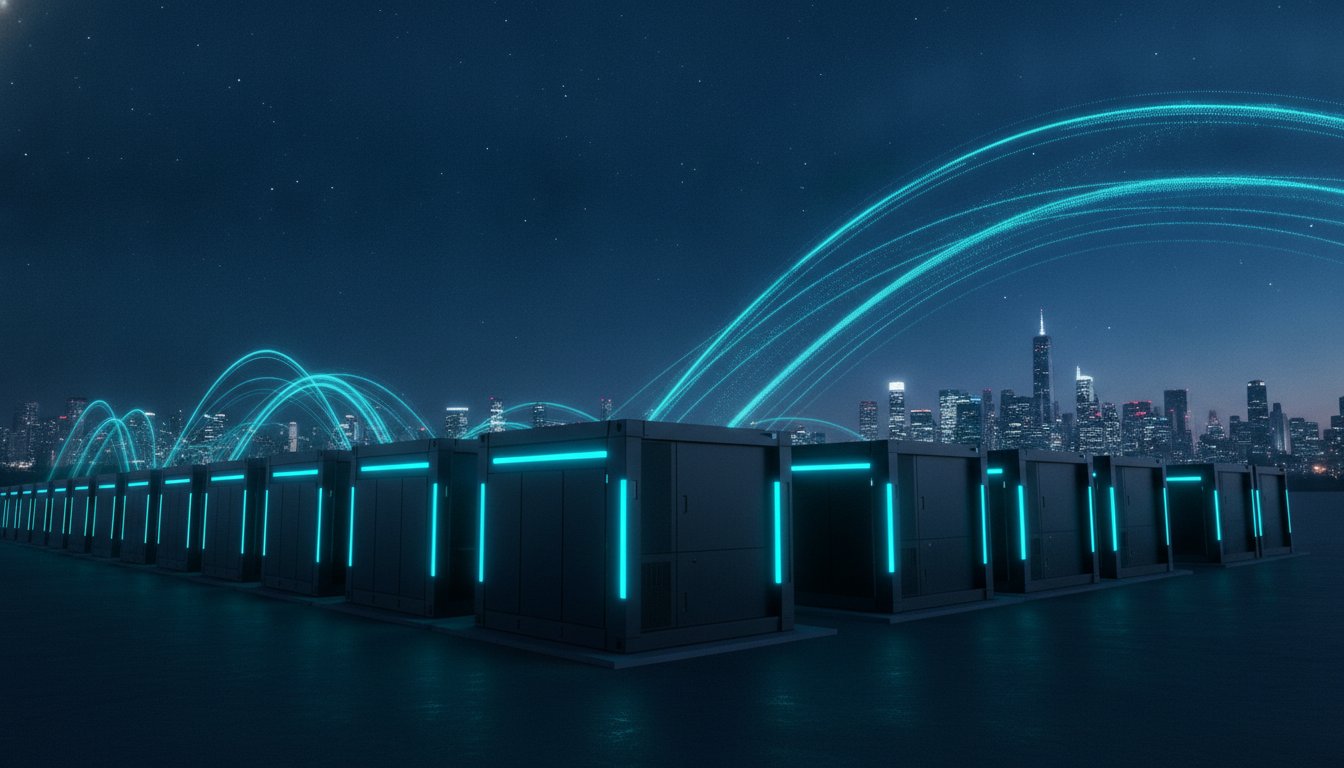
In 2026, a commercial battery energy storage system is no longer just a backup power source; it is a high-stakes financial instrument that must be engineered for bankability from day one. You likely recognize that while the potential for 30% ITC credits and 10% domestic content bonuses is massive, the technical complexity of meeting 2026 NFPA 855 fire safety standards and navigating grid interconnection delays has never been higher. It's a challenging environment where a single design oversight can jeopardize your entire investment and delay your path to operational excellence.
This guide provides the strategic framework to master critical commercial BESS design considerations, ensuring your project attracts Tier-1 financing and operates with peak resilience. We will explore how to navigate the shift toward 4-hour LFP architectures, the financial impact of the One Big Beautiful Bill Act on your long-term ROI, and the engineering rigor required to meet the latest UL 9540A safety protocols. By aligning sophisticated hardware with AI-driven energy management, you can transform a standard storage installation into a high-performance grid asset that delivers stable, predictable value for decades.
Key Takeaways
- Understand the 2026 shift from simple peak shaving to complex grid-service participation, positioning your storage system as a strategic infrastructure asset rather than a basic backup.
- Navigate critical commercial BESS design considerations by evaluating the specific performance trade-offs between established LFP and emerging Sodium-Ion chemistries for diverse environments.
- Implement multi-layer safety architectures that exceed 2026 NFPA 855 standards, ensuring your project meets the most rigorous international fire safety and grid-code requirements.
- Execute a structured 5-step engineering framework designed to minimize operational risk and secure the Tier-1 financing necessary for large-scale energy deployments.
- Discover how strategic engineering consulting bridges the gap between initial load profile analysis and high-performance, bankable hardware integration.
The Strategic Landscape of Commercial BESS Design in 2026
Commercial energy storage has evolved into a foundational infrastructure asset. In the current market, a Battery Energy Storage System (BESS) is no longer viewed as a simple backup power source or a secondary utility; it's a strategic financial engine designed for multi-revenue stream participation. As we move through 2026, the shift from basic peak shaving to sophisticated grid-service participation defines the modern project. This transition requires a fundamental change in how we approach commercial BESS design considerations, moving away from "box-shifting" toward integrated energy architecture that prioritizes long-term bankability and resilience.
To better understand the core principles of this architectural shift, watch this helpful video regarding technical integration:
Design precision is the primary factor that dictates whether a system functions as a 10-year liability or a 20-year high-performance asset. With global energy mandates and the "One Big Beautiful Bill Act" (OBBBA) driving unprecedented C&I storage requirements, engineers must account for rigorous operational cycles. A system engineered without this foresight often fails to meet the stringent degradation curves required by Tier-1 financiers. By leveraging Foton's strategic partnership with Cospowers, which brings 30 years of manufacturing heritage, designers can access hardware that is proven to withstand these evolving grid demands.
Drivers of Design Complexity: Grid Volatility and ESG
Grid congestion is no longer a localized issue; it's a global barrier to industrial expansion. This volatility forces more sophisticated discharge strategies, where the BESS must act as a stabilizer for the local network while simultaneously fulfilling corporate ESG mandates. We are seeing a rapid transition from traditional "behind-the-meter" setups to hybrid grid-connected models. These systems must support "Green Mandates" by ensuring that 100% of stored energy is utilized to offset carbon-intensive peak periods, directly impacting the complexity of the EMS logic and hardware selection.
Defining Project Goals: Power vs. Energy Applications
Successful design begins with a clear distinction between high-power and high-energy applications. If your objective is frequency regulation, you require a system capable of rapid, high-intensity bursts. Conversely, load shifting and resilience require high-energy density for sustained discharge. Balancing initial CAPEX with long-term operational flexibility is the central challenge here. Choosing between established LFP or emerging Sodium-ion chemistries depends entirely on these goals. We must align the technical architecture with the specific load profile of the facility to ensure the resulting design attracts the necessary investment for global scale.
Core Technical Parameters: Chemistry Selection and Sizing
Sizing a commercial battery array is a delicate exercise in financial engineering. It's where technical specifications meet long-term project bankability. In 2026, commercial BESS design considerations center on finding the "sweet spot" between usable capacity and the inevitable rate of cell degradation. If you undersize a system to save on initial CAPEX, you risk cycling the batteries too aggressively, which leads to premature capacity loss and potential warranty disputes. Conversely, over-engineering the system adds unnecessary costs that can stifle your internal rate of return (IRR).
Lithium Iron Phosphate (LFP) continues to dominate the market, accounting for nearly 95% of new utility-scale and C&I awards globally as of early 2026. Its reputation for thermal stability and high cycle life makes it the preferred choice for most standard applications. With international tender results for utility-grade LFP cells currently ranging between $55 and $75/kWh, the economic case for LFP remains incredibly strong for projects requiring 4-hour to 8-hour discharge durations.
LFP vs. Sodium-Ion: A Strategic Design Choice
While LFP is the incumbent, Sodium-ion has emerged as a critical disruptor for 2026. Sodium-ion systems offer superior performance in temperature-extreme environments, maintaining efficiency in freezing climates or high-heat industrial settings where LFP would require energy-intensive HVAC support. For data centers and cost-sensitive projects, the lower raw material costs of sodium provide a hedge against lithium market volatility. To understand how this fits into your procurement timeline, explore our strategic analysis of sodium-ion battery commercial availability.
The impact of Depth of Discharge (DoD) on your ROI cannot be overstated. Most modern Tier-1 systems, like those manufactured by our partner Cospowers, are designed for high DoD, but consistently pushing a system to 100% discharge will accelerate aging. Strategic design involves calculating a DoD that balances daily energy needs with the goal of maintaining an 80% state-of-health over a 15 to 20-year lifespan. You can consult with our engineering team to run these complex degradation simulations for your specific site.
Modular Architecture and Scalability
Scalability is a non-negotiable requirement for future-ready infrastructure. Modern commercial BESS design considerations prioritize modular, containerized energy storage systems that allow for "Plug-and-Play" expansion. This approach offers several advantages:
- Reduced On-site Labor: Pre-configured containers arrive ready for grid connection, minimizing commissioning delays.
- Phased Deployment: Start with the capacity you need today and add modules as your facility's load or grid-service participation grows.
- Maintenance Accessibility: High-capacity LFP battery modules arranged in a modular rack system allow for individual cell monitoring and easier component replacement without taking the entire system offline.
By focusing on modular density, you maximize the energy footprint of your site while ensuring the system remains serviceable for its entire operational life. This flexibility is what separates a static battery backup from a dynamic, bankable energy asset.
Safety Architecture and Regulatory Compliance
Safety is the non-negotiable foundation of a bankable energy storage project. In 2026, commercial BESS design considerations have shifted from simple containment to proactive, multi-layer prevention. This evolution is driven by the 2026 edition of NFPA 855, which now makes a Hazard Mitigation Analysis (HMA) a default requirement for most installations. Engineers must design systems that don't just react to thermal events but actively prevent them through granular, cell-level monitoring and intelligent control logic.
Thermal management is a critical pillar of this architecture. In high-density deployments, the choice between passive and active cooling affects both safety and operational longevity. Active liquid cooling is increasingly preferred for its ability to maintain uniform cell temperatures, which reduces the risk of localized hotspots that can trigger thermal runaway. This precision ensures that the system operates within the strict thermal parameters required by insurers and grid operators, protecting the asset from premature degradation.
Grid-code compliance remains a complex hurdle, particularly in highly regulated markets like Australia and Western Europe. Systems must demonstrate robust frequency control, voltage support, and rapid response capabilities to gain interconnection approval. Without these technical proof points, a project cannot move from the design phase to commissioning. Aligning your engineering with specific regional grid requirements is essential for ensuring the system can participate in lucrative ancillary service markets.
Fire Suppression and Risk Mitigation
Integrating aerosol or clean-agent suppression systems directly into the battery enclosures provides a vital first line of defense. Structural integrity is equally vital; explosion venting must be engineered to redirect pressure away from critical infrastructure in the event of a cell failure. Safety Architecture represents the integrated hierarchy of preventative and reactive systems, from cell-level monitoring to structural explosion venting, required to mitigate thermal runaway risks under NFPA 855 standards.
Achieving Bankability through Certification
Financiers and insurers don't just look at storage capacity; they look at risk profiles. To secure Tier-1 financing, projects must provide DNV verification and UL 9540 system-level certifications. This is where the 30-year manufacturing heritage of a partner like Cospowers becomes a decisive advantage. Their modules undergo the latest UL 9540A 6th Edition testing, providing the empirical data needed to satisfy the most cautious investors. Navigating these requirements requires specialized knowledge and strategic foresight. You can learn more about BESS engineering consulting services to ensure your design meets these rigorous global compliance standards.

The 5-Step Commercial BESS Design Framework
Engineering a bankable energy storage project requires a methodical, multi-disciplinary approach. Success in 2026 isn't achieved through hardware procurement alone; it's the result of a rigorous framework that aligns technical specifications with financial objectives. By following a structured design process, you ensure that every commercial BESS design considerations factor—from chemistry selection to grid verification—is optimized for maximum asset life and ROI.
- Step 1: Feasibility and Load Profile Analysis. We begin with the "Application Study," a deep dive into your facility's specific energy consumption patterns. This phase identifies the exact peaks and troughs in your load profile to determine the necessary discharge duration.
- Step 2: Hardware Configuration and Chemistry Matching. Based on the application study, we select the optimal chemistry—typically LFP for standard cycle life or Sodium-ion for specific thermal challenges. This step ensures the physical hardware is perfectly suited for the intended use case.
- Step 3: AI-Driven EMS Integration. The energy management system is integrated as a core design component, not a secondary add-on, to facilitate real-time optimization and autonomous grid interaction.
- Step 4: Site Infrastructure and Civil Engineering. This involves the physical layout, including electrical interconnects, thermal management spacing, and fire safety structural requirements tailored to the specific site geography.
- Step 5: Commissioning and Grid Connection Verification. The final step involves rigorous testing to ensure the system meets utility-grade standards and is ready to generate revenue through grid-service participation.
Integrating AI-Driven Energy Management (EMS)
The EMS acts as the "brain" of the entire system architecture. Modern design requires software that goes beyond simple monitoring; it must offer predictive maintenance capabilities and machine-learning algorithms that anticipate grid volatility. This intelligence ensures the system stays within safe operational envelopes while maximizing revenue. For a detailed breakdown of software specifications and integration protocols, explore our AI driven energy management system guide.
Project Feasibility and ROI Modeling
A high-performance design is only as good as the business case it supports. We must model diverse revenue streams, including demand charge reduction, peak shaving, and participation in frequency control ancillary services (FCAS). Accurate ROI modeling ensures that the technical design supports the broader commercial and industrial BESS solutions business case, attracting Tier-1 financing through proven fiscal resilience. To begin your project with a comprehensive feasibility study, partner with our engineering consulting team today.
By treating these steps as an interconnected ecosystem, you move beyond basic energy storage and into the realm of strategic infrastructure. This framework ensures that the final deployment isn't just operational, but commercially optimized for the next two decades of energy transition.
Foton Energy: Engineering Bankable BESS Infrastructure
Foton Energy provides the critical link between high-level engineering and field-ready deployment. We don't just supply hardware; we engineer bankable infrastructure that withstands the technical and financial scrutiny of the 2026 market. By leveraging our exclusive global partnership with Cospowers, we offer Tier-1 LFP and Sodium-ion systems that are fundamentally designed to meet the most rigorous commercial BESS design considerations. This collaboration combines 30 years of manufacturing heritage with the strategic agility needed to navigate modern grid requirements.
Our end-to-end consulting services move your project from initial feasibility studies to wholesale procurement with seamless precision. We understand that a successful BESS project is built on more than just capacity; it's built on trust, reliability, and verified performance. This is why we prioritize DNV-verified modules and AI-driven EMS logic that ensures your asset remains a high-performance cornerstone of the grid for decades.
Wholesale Procurement and Supply Chain Security
Supply chain security is a non-negotiable requirement for global EPC partners and developers. We provide direct access to Tier-1 modules, mitigating the risks of geopolitical volatility and raw material fluctuations that often delay large-scale projects. Our strategic management ensures that your procurement timeline remains predictable and your project stays on track for commissioning. Every system we deliver is backed by a 30-year manufacturing heritage, providing the long-term warranty support and technical reliability that Tier-1 financiers demand.
- Direct Tier-1 Access: Wholesale LFP and Sodium-ion modules sourced directly from our manufacturing partner.
- Verified Compliance: Hardware that meets the latest UL 9540 and NFPA 855 standards out of the box.
- Global Scale: Scalable solutions designed for diverse international markets and complex grid codes.
Partnering for Success
Success in the 2026 energy transition is a collaborative endeavor. We support resellers, installers, and developers by providing the technical proof points and custom engineering required for mission-critical sectors. Whether you're designing for high-density data centers requiring uninterruptible backup or remote telecom networks, our Australian engineering expertise ensures your system is optimized for resilience and ROI. Contact Foton today to begin your utility scale BESS procurement journey and secure a partner dedicated to your long-term operational excellence.
We invite you to participate in a shared vision of a cleaner, more resilient future. By aligning sophisticated hardware with rigorous engineering standards, we are building the energy networks of tomorrow. Let's engineer a solution that doesn't just meet the current standard but sets the benchmark for the next generation of energy storage.
Engineering the Future of Resilient Energy Infrastructure
Mastering the 2026 energy transition requires a fundamental shift from viewing storage as a secondary utility to treating it as a high-performance financial asset. By integrating rigorous technical parameters with a structured design framework, you ensure your project achieves the bankability required for long-term operational success. We've explored how critical commercial BESS design considerations, such as selecting between LFP and Sodium-ion chemistries and implementing multi-layer safety architectures, dictate the resilience of your energy network.
As the exclusive global partner of Cospowers, Foton Energy offers a unique combination of a 30-year manufacturing heritage and advanced Australian engineering expertise. We provide direct access to Tier-1 hardware and AI-driven EMS optimization designed to maximize your ROI while navigating complex grid-code compliance. It's time to move beyond standard storage and build a strategic grid-asset architecture that's ready for the demands of the next two decades.
Partner with Foton Energy for bankable BESS engineering and Tier-1 hardware to secure your position in the evolving global energy market. Let's collaborate to design a system that's not only technologically advanced but commercially stable for decades to come.
Frequently Asked Questions
What are the primary design considerations for a commercial BESS?
The primary commercial BESS design considerations involve a precise alignment between your facility's load profile and the system's discharge duration. Engineers must prioritize safety compliance with 2026 NFPA 855 standards while ensuring the hardware architecture supports multiple revenue streams. This dual focus on technical precision and financial performance ensures the asset remains bankable for Tier-1 investors throughout its operational life.
How do I choose between LFP and Sodium-ion for a commercial project?
Choosing the right chemistry depends on your specific operational environment and budget constraints. LFP remains the global standard for high cycle life and thermal stability in temperate climates. However, Sodium-ion is the superior choice for 2026 projects in temperature-extreme environments or for developers looking to hedge against lithium market volatility. Both chemistries offer unique advantages that must be matched to your site's thermal and financial goals.
What safety standards must a commercial BESS meet in 2026?
In 2026, all commercial systems must adhere to the latest NFPA 855 standards, which include mandatory Hazard Mitigation Analysis for most installations. Your design must also achieve UL 9540 system-level certification and pass UL 9540A large-scale fire testing. These certifications provide the empirical data required by insurers and authorities to approve the integration of high-density storage into industrial or urban environments.
How does an AI-driven EMS improve BESS design performance?
An AI-driven EMS acts as the system's central intelligence, moving beyond basic monitoring to provide predictive maintenance and autonomous market participation. It optimizes discharge cycles based on real-time grid pricing and weather forecasts, significantly improving ROI. By managing cell-level degradation through machine learning, the EMS extends the asset's usable life and ensures it operates within the strict safety envelopes required by modern grid codes.
What is the difference between power-heavy and energy-heavy BESS design?
Power-heavy designs are engineered for rapid, high-intensity discharge, making them ideal for frequency regulation and voltage support. Energy-heavy designs prioritize storage capacity for sustained discharge over four to eight hours, which is essential for peak shaving and renewable energy time-shifting. Identifying whether your project is a power or energy application is a fundamental step in the hardware configuration and chemistry selection process.
How long does the design and commissioning process take for a C&I BESS?
The timeline for designing and commissioning a C&I BESS typically ranges from six to twelve months. This duration includes initial feasibility studies, hardware procurement, and the often complex grid interconnection approval process. While containerized, modular systems can be installed quickly on-site, the verification and safety testing required for grid-service participation must be meticulously planned to avoid operational delays and ensure long-term stability.
What makes a BESS design 'bankable' for financiers?
Bankability is achieved through a combination of Tier-1 hardware, rigorous international certifications, and a proven manufacturing heritage. Financiers look for systems with DNV verification and components from established partners, such as Cospowers, who bring decades of experience to the project. A design that incorporates AI-driven optimization and meets all 2026 safety standards provides the low-risk profile necessary to attract large-scale infrastructure investment.
Can a commercial BESS be co-located with existing solar PV?
Yes, co-locating a BESS with existing solar PV is a standard practice that maximizes the value of your renewable generation. You can integrate storage through AC-coupling for existing systems or DC-coupling for new installations to improve efficiency. This configuration allows you to store excess solar energy for use during peak pricing periods, significantly reducing demand charges and improving the overall payback period of your clean energy infrastructure.


